- January 19, 2026
- by Resonance Colleges
- 1164 Views


JEE Advanced is the advanced-level examination for JEE Main-qualified students, and in both cases, the exam patterns are completely different yet share a similarity. Because the questions are answered through logic and multi-concept thinking, and by applying formulas directly, solving them is almost impossible. Hence, concept clarity carries the highest weightage. In the upcoming arguments, an aspirant can understand why only concept clarity wins - not just practice.
How to build conceptual clarity? An aspirant must actively participate in learning the concepts, recall all significant points, and try to recall them in their own words at the end. Since aspirants will appear for the national-level examination, they must approach the question paper with confidence and complete the exam with greater speed and accuracy. When an aspirant improves these parameters, they can handle unfamiliar questions calmly and reason through tricky questions to arrive at the correct answers.
What should be the mode of practice? An aspirant should first practice easier questions and tackle tougher ones later. The aspirant must attentively analyse the incorrect answers, correct them to perfection, and thereby reduce conceptual gaps. For JEE Main aspirants, this procedure is compelling, and it continues in JEE Advanced preparation.
Although the preparation is relatively in-depth, the procedure for evaluating mistakes and refining concepts remains the same. In fact, an aspirant must repeatedly undertake mock tests and consider them carefully to become completely error-free in solving multiple-choice questions.
From this, one thing is clear: to be selected for IITs, an aspirant must have a thorough understanding of concepts and their applications in a logical sequence. Therefore, conceptual clarity is the most critical factor in delivering results and the fuel that drives them.
In fact, JEE Advanced tips can help an aspirant correct mistakes promptly, reduce the learning curve, and spend more time on revision and practice sessions.
Understandably, most aspirants are well aware of the JEE Advanced tips but still find it challenging to qualify for JEE Main, the gateway to JEE Advanced. Why is it so? Most of the time, aspirants prepare without a proper strategy and fail to follow the essential tips that lead to success on their first attempt. Merely building concepts alone doesn't deliver the desired results. An aspirant must strategise their preparation for JEE Advanced and follow its tips.
Practising previous years' JEE Advanced question papers is of no value if an aspirant lacks a thorough conceptual understanding. Proper feedback from mentors on the solved answers alone can enable an aspirant to reduce errors again; conceptual thinking shouldn't be lacking. Another significant issue is never to practice randomly but to use innovative, focused problem-solving techniques.
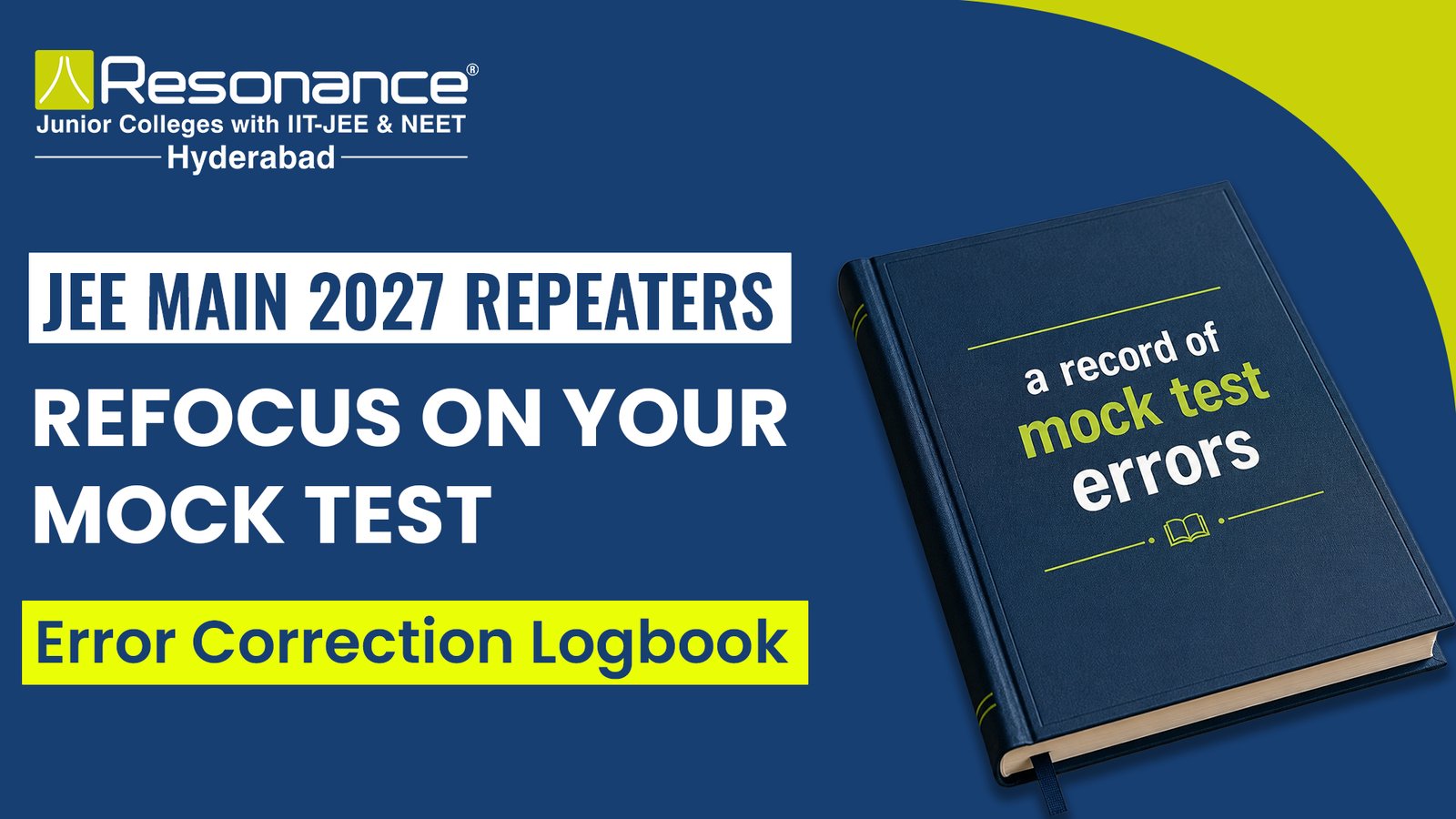
While practising for the JEE Advanced, you must keep track of time, avoid attempting lengthy questions first, and reduce the time spent on other questions. An aspirant must maintain an error book to track mistakes and conceptual gaps, which is possible only when the aspirant's thinking process takes a conceptual curve. Therefore, practice without conceptual support means nothing in preparation. The JEE Advanced aspirant must remain disciplined, trust the process, and work consistently, while maintaining conceptual clarity.
An aspirant must remember that a JEE Advanced Strategy is the design plan for making the preparations more meaningful and precise to obtain a good percentile in the final exam. Throughout the process, conceptual clarity is the foundation of strategy execution. And, it can be described in this manner.
Strategy shifts as aspirants' exam dates approach; their priority order for revisions changes accordingly. It depends entirely on the clarity of the subject and the conceptual understanding.
An aspirant may require more hours to prepare for mathematics, physics, or chemistry, but this is proportional to the degree of clarity the mind achieves in conceptual thinking.
An aspirant's mock tests, corrections, error book cross-checks, and revisions are purely dependent on the clarity of fundamentals and analytical skills.
Consistent hard work is essential for success in JEE Advanced, but the most important foundation is a firm grasp of NCERT and standard books for specific topics, from high-quality authors. Conceptual building is like laying the proper foundation at the right time; it should begin on the first day of Class 11 if not started earlier.
Summary:
Many aspirants overlook the most important point when preparing for JEE Main and JEE Advanced: success depends solely on concept clarity. Success in JEE Advanced hinges on conceptual understanding; mere practice doesn't guarantee it. However, JEE Advanced tips and JEE Advanced strategy can provide better guidance.
A. Almost all JEE Advanced questions depend on conceptual understanding, and rigorous practice alone doesn't guarantee success.
A. An aspirant must understand the NCERT books for classes 6 to 12 in mathematics, physics, and chemistry. These books are a valuable reference for conceptual understanding.
A. Aspirants must realise a simple fact: most of them have no conceptual understanding of the topics in their subjects, and to improve it, they must begin by working through simple to complex problems.




Copyright © 2021 - 2026 RESONANCE HYDERABAD. All rights reserved. Managed by MAIDEN DROP EDU FOUNDATION and MAIDEN DROP EDU FOUNDATION SOCIETY